Tantos yos was born from ongoing questions I have about identity. Listening to the music and ideas of artists I admire, like Eblis Álvarez and Canela Palacios, I was struck by two approaches in particular: the alter egos Eblis uses to free himself from himself when writing lyrics, and the “broad sound” of La permanencia by Canela, whose opening —almost a scream— is built from a single gesture: the same finger position extended across a group of Tarkas from different families and sizes, where richness arises precisely from internal differences.
From there, I wanted to explore what I call “the components of an element,” especially through the use of pitch shifters and subtractive synthesis. The piece is based on a very limited harmonic material, focused almost exclusively on the note F and its harmonics. This restriction acts not as a limitation but as an invitation to listen to the minimal: microtunings, timbral variations, breathing, subtle gestures that, when exposed, reveal unexpected layers.
The electronics do not accompany; they amplify, prolong, multiply. Pitch shifters, a simple synthesizer, a harmonic ring modulator, and audio files derived from flute recordings function as reflections or doublings. I was interested in creating an “expanded unison,” where small pitch deviations generate a vibrating field in constant motion —as if multiple versions of the same performer were playing at once, never fully aligned.
Throughout the piece, this idea of sonic unity manifests as a moving block or, by contrast, is “dissected” to expose its most fragile parts.
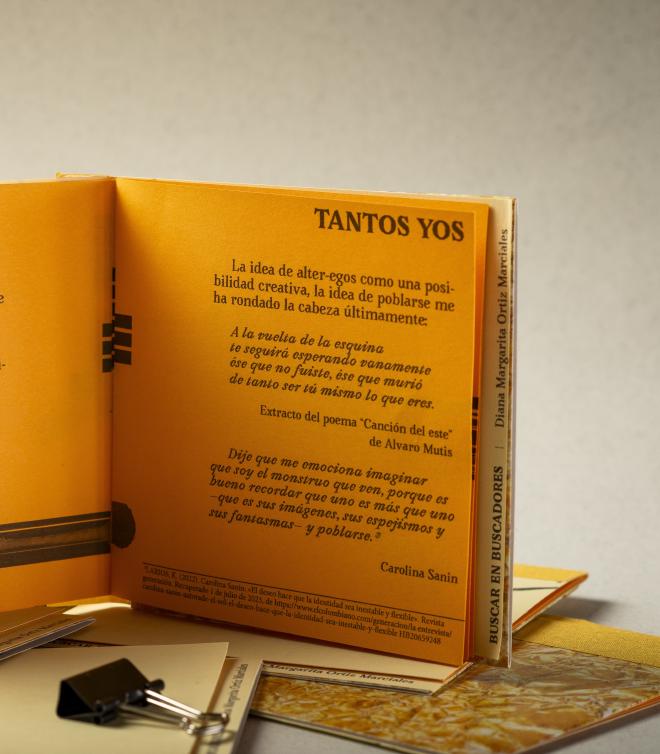
Thanks to the UL ensemble (Laura Cubides and Daniel Leguizamón) for the conversations and reflections shared during the creative process. To Hannah Wolf and Natalia Molina, performers and friends, for their generous help in creating the sound files. And to Evelin Deger, for her sensitive performance and the recording of this piece on the album Buscar en buscadores.